
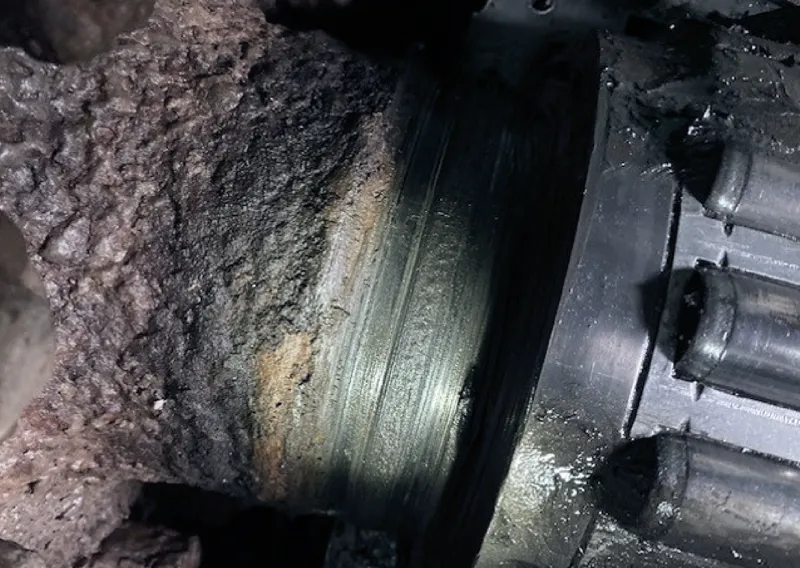
Rotating Biological Contactors (RBC) are critical in water treatment, and condition monitoring is used to monitor lubrication levels and detect early bearing damage on low-speed main bearings. In a trial at Severn Trent Water, SPM HD shock pulse technology detected a developing bearing fault at around 1 RPM and supported planned replacement.
The application was RBC main bearings, with rotational speed typically fixed between 0.9 and 1.8 RPM. During a six-month trial, periodic measurements were conducted using portable instruments, equipped with glue-on shock pulse adapters and protective caps due to the environmental conditions and the trial's short duration.
After greasing reduced shock pulse levels, rising readings confirmed bearing damage. The bearing remained operational while being monitored until a planned replacement was made after a twelve-week lead time, after which readings returned to acceptable levels. Condition monitoring enabled optimized lubrication schedules, planned maintenance efforts, and minimized breakdowns.
No downloads